








I have huge respect for all paramedics and our amazing NHS. I’ve always had amazing care when I’ve needed to use it. But what are they trained to do? What is the latest thinking on how to deal with someone having suspected allergic reaction? What are first aiders and paramedics taught to do? Is there a need for further training?
The reason I’m asking is because I feel mistakes were made when I had my most recent allergic reaction. I don’t want to throw blame, I just want to learn and make things better.
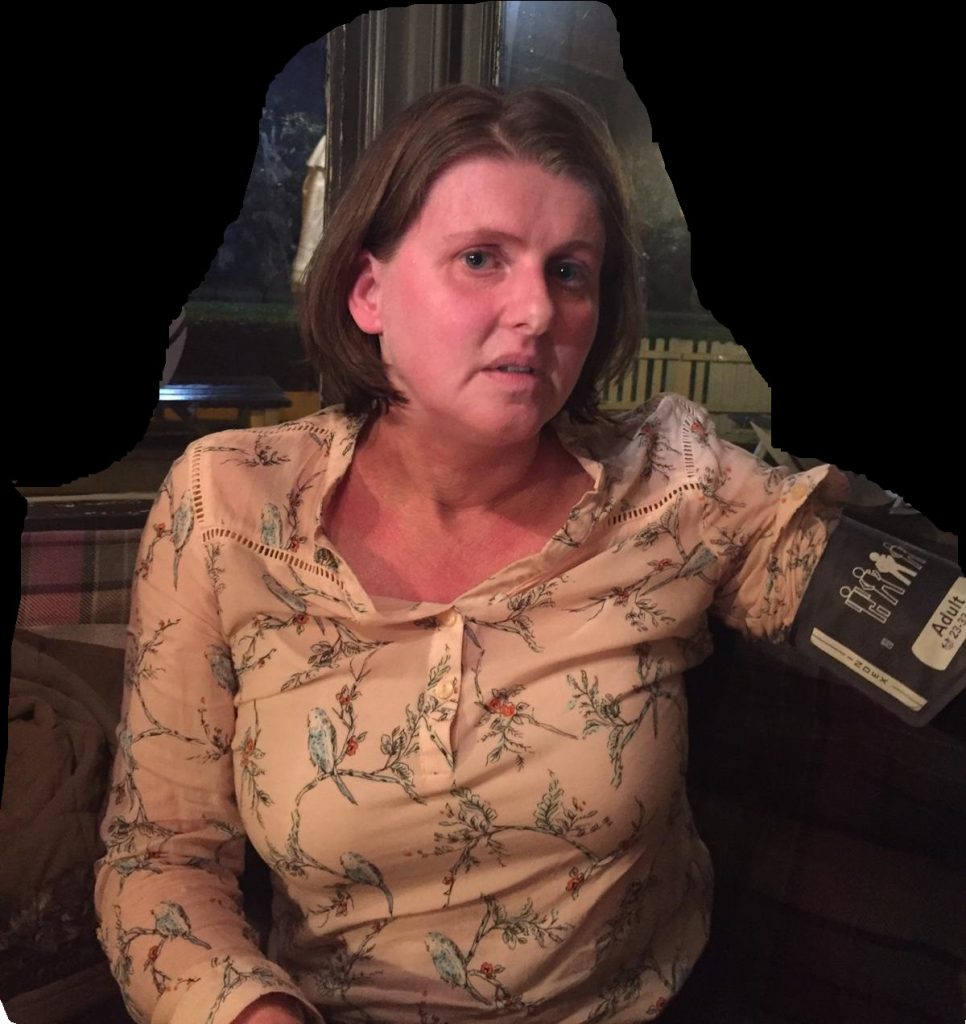
What went wrong?
And like most people, every time I have a serious anaphylactic reaction I do a complete health and safety debrief to work out what went wrong. Did I make mistakes? Is there something I could do differently next time? There usually is something to learn from every situation and doing this really helps me feel more in control and more confident to get back out there into the big, wide, allergy infested world.
Those of you who know me will know I had a very bad reaction last November resulting in a night in intensive care. And of course, there are always take home lessons to be learnt… as well as the obvious one… to stop eating dairy! The mistakes made at the pub where this happened are another story for another day.
The main lessons I learnt from this occasion were:
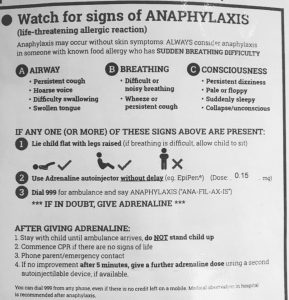
- If in doubt inject – I was going to. I had the pens out. I had hives spreading and I had a terrible sense that something was very wrong, even though my breathing was fine. My friends said I looked a funny colour. They knew me better than the paramedics and were urging me to inject my adrenaline. I was able to speak to my friends and the paramedics, who arrived within minutes of us calling. But the paramedics told me not to inject the adrenaline. They told me I was fine and that they would take me into hospital as a precaution. I believed them. Mistake number one. I should have trusted my gut instinct… I wanted to inject and probably would have done if the paramedics had not arrived so quickly.
- Do not stand up or try to walk – I know this. I’ve seen first hand in my own experiences how walking can really speed up and exacerbate a reaction. And when I’ve managed to stay calm, sit still, take antihistamines and not move at all… sometimes I’ve had only a mild reaction. Every time I’ve walked or moved it’s been a steady and fast spiral into decline and most recently, I don’t know if I am unconscious but have no memory of what happens until I wake up. The advice given by the Anaphylaxis Campaign backs up this evidence. You should never get someone having anaphylaxis to walk. Despite knowing this for myself and despite asking the paramedics if it was a good idea for me to walk, that it often made me worse, I allowed them to lead me to the ambulance. By the time I got there I was unable to walk any further, my whole body was shaking from head to toe and I was struggling to breath. I was also vomiting. I was not in anaphylaxis and it hurt. Thanks to peanut_allergy_mummy on instagram for the diagram above. You can also read, Fatal posture in anaphylactic shock in JACI, the Journal of Allergy and Clinical Immunology. The NHS guidelines advise to lie down and to avoid standing up. You can read these here, Anaphylaxis Treatment.
- When you are feeling like anaphylaxis is definitely happening – inject... and again, once in the ambulance, despite begging for my adrenaline none was administered. I pretty quickly lost control of the situation then and can’t remember much.
Now I don’t know what would have happened if I’d administered my adrenaline straight away. If I’d not walked to the ambulance and instead stayed seated and even better, managed to lay out flat with my feet in the air. I don’t have a magic wand. But these things are known medical advice that the paramedics treating me didn’t seem to be aware of.
What did the paramedics say?
I wrote to them after I had recovered to bring these things up. I made it quite clear I wasn’t complaining, but asked them to review their procedures, a quick google search brings up the main trusted links to go to so that they could read the professional medical advice on this.
Their response was very disappointing. It seems they did a full review of the incident, treated my correspondence as a full complaint about their care and found that their staff had done nothing wrong. The had treated me within their recommended guidelines. They even kindly sent me a copy of their outdated guidelines.
They made me feel a bit stupid. I mean the were very nice, the were very apologetic, but they made me feel like I didn’t have a voice or a right to any control over my treatment. They made me feel like what I’d said to them didn’t matter. When what I’m saying to them is born from a desperate passion to save lives and reduce suffering.
So what next?
I have only just realised that I have let my anger at their easy dismissal of my concerns stop me acting. I haven’t gone back to them to push my point. But it’s been nagging me now for a while. What if another person is not so lucky? What if someone else fails to administer adrenaline, walks to the ambulance and never walks back out of that hospital?
So I will let you know what the response is from East of England Ambulance Service. I don’t want anything from them. I just want them to think about what I’m saying. I’m the patient and I knew I should administer adrenaline and that I should not walk, but they did not take my concerns seriously. I was in the beginnings of an allergic reaction and from experience I often lose the plot a bit. I don’t behave rationally. I don’t always do things in the right order. My brain is in save mode and it can’t believe I’ve done this to it again… Because I was able to talk and didn’t have breathing difficulties or raised blood pressure when they tested, they decided I was OK.
However, my resting heart rate is normally about 52-54. When they tested me, sitting in the pub it read at 92 BPM. For me that’s quite high. It would go to 120 BPM when I’m out for a gentle run. I could feel it pumping away inside me and that’s not a nice feeling when you’re sitting still.
It turned out I wasn’t OK. And the rest is now ancient history.
Calling all paramedics
So I’d love to talk to first aiders, paramedics and medical professionals. I want to raise two things. If in doubt, administer adrenaline, especially if the person has had serious delayed reactions in the past and also, the importance of not moving the person.
If someone who is having an allergic reaction wants to administer their adrenaline why would you tell them not to? And would you advise walking a patient to the ambulance?
Don’t stand up and don’t walk!
DO NOT STAND UP.
DO NOT MOVE.
STAY CALM WITH FEET UP OR STAY SITTING.
That is all…


This is not the case, from what I’ve heard, in the states. I’m glad you at least survived-but I didn’t know moving exacerbated the affects! Great lesson! Thank you!
Really? I’m glad to spread this information then. Please tell everyone! I thought it was the case as the reaction I had in the US I was carried out. Having said that I was unconscious when they found me so I guess they didn’t have much choice on that occasion. Ha!
I had no idea this was the case!! This is really helpful information. I’m yet to ever have a serious reaction and the thought of it fills me with anxiety but knowing things like this definitely helps ease that!
Hi Becca, ;yes it is so scary, the worrying. All you can do is be as prepared and careful as you can and if it does happen, and i hope it doesn’t, the best advise is to stay calm and stay still! Easier said than done when you’re panicking.
My son, at 2, had an ana reaction but my husband had left the epipen in the car. He called the ambulance and asked if he should get the epipen (there was someone else that could stay there with the child), and was told not to. No adrenaline was used in his treatment when the ambulance arrived (fairly quickly). I wasn’t there to witness it but it’s been bugging me for years that he was given the wrong advice, and it made me second guess myself for a long time trying to figure it out. I’m sorry to hear things haven’t changed in treatment in the UK (was Surrey about 5 years ago).
I think that some paramedics do know because I have also had experiences where they have calmed me down, made me still, helped me administer my adrenaline and then given me more. and more, and more! I think I had six adrenaline injections one time, my first reaction to dairy, where I left the pub and walked home, alone to then collapse alone! Stupid! But I’m still here. And Now I’ve finally got over the last reaction, mentally I realise I need to make sure this advise is widely know, because I don’t think it is.
I, too, hadn’t ever heard the part of about lying down and am glad to know . I am sorry this happened to you but praise your tenacity to take on the challenge of trying to educate the medical professionals who need it . I know you’ve been in the food allergy community for years and thank you for your continued passion and efforts.
Awwww Daniela, thank you so much. That’s so kind. Yes I kind of live, eat, sleep and dream allergies. It’s kind of my calling. It just want to help others, because it can be a very lonely place and very scary too, especially for the newly diagnosed. Just happy to spread awareness wherever I go. 😉
As a volunteer with one of the UK medical charities I can tell you from my experience in our organisation that an auto injector is always recommended all the way from First Aider to Ambulance crew.
I can’t comment on what the EEAST directives are but we would always use an auto injector if one was available.
Thanks so much! That’s what I thought. I’m just trying to get a dialogue with them to ask if they can review their protocol because I think it needs updating… thanks again, this is good to hear